Amazon’s 3,000-acre data center in Wharton County, Texas moves forward despite Abbott’s data center “ban”
10/05/2026 / By Lance D Johnson
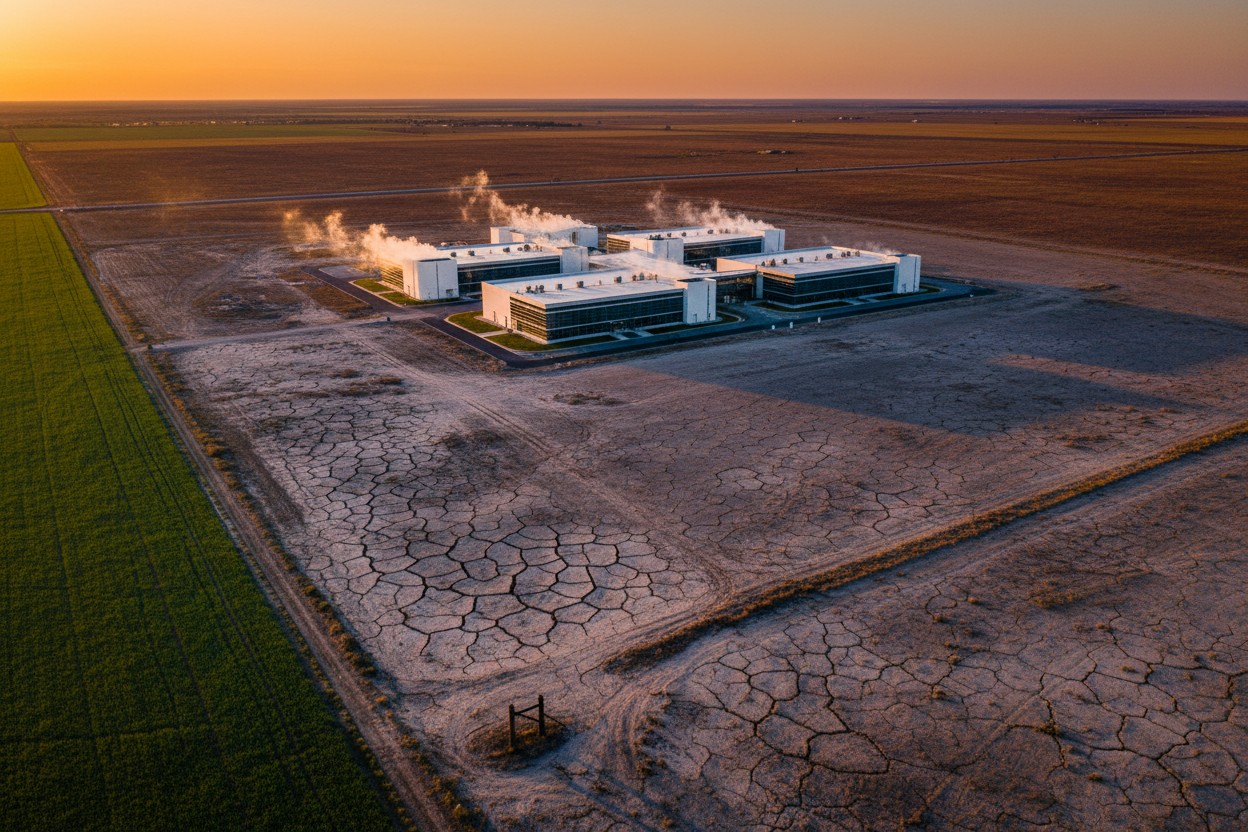
An hour south of Houston, a 3,000-acre digital fortress is rising from farmland while the governor’s much-publicized data center ban dominates headlines. Regulators have approved Amazon’s campus near Boling in Wharton County, even though Gov. Greg Abbott announced his crackdown on Sept. 21. The order is a pause on new state permits, not a prohibition, and it landed after Amazon’s local groundwater permits were already issued.
Key points:
- Abbott’s Sept. 21 order freezes new state permits for data centers until a grid audit is finished, and the audit is expected in December.
- Amazon’s Wharton County permits cover millions of gallons of groundwater, while the surface water the complex needs falls outside them.
- Texas data centers used 25 billion gallons of water in 2025, a figure projected to reach 161 billion by 2030.
- County officials say they lack water rights and zoning authority to slow data center growth.
- Amazon promises water replenishment and cooling without groundwater, but those are corporate pledges, not enforceable limits.
What Abbott’s pause really covers
On Sept. 21, Abbott directed the Texas Commission on Environmental Quality to halt permits sought by data centers until the Electric Reliability Council of Texas, the state’s grid operator, completes its audit. According to the governor’s announcement, no state agency should advance approvals until that information is gathered. Houston Public Media reported that the freeze reaches air and water permits, including those needed to draw river water or build an on-site power plant.
The order is narrower than the word “ban” suggests. It freezes approvals still to come, and the governor’s office says projects must cover their own electrical infrastructure costs and lower residential power bills. Abbott also told the Texas Water Development Board to enforce water-use reporting and penalize past failures. Amazon was among several dozen companies that said they would comply, and it insists it is “building responsibly in Wharton County.” Next session, Abbott says he will work with lawmakers to end financial incentives, which the Texas Tribune puts at more than $1 billion a year in tax breaks.
A thirsty neighbor in farm country
Wharton County is rice and row-crop country, where water decides the harvest. Amazon’s permits let it tap three wells for restrooms, construction crews and fire protection, up to 78.2 million gallons over two and a half years, the Houston Chronicle reported. Two more wells could add up to 16.9 million gallons by February 2029. None of that governs the millions of gallons of surface water the complex would need. Amazon says surface water is used only during the hottest hours of the year. Farmers know those hours well, because they are when crops are thirstiest and rivers run lowest.
The statewide picture sharpens the worry. The Austin Chronicle reported that Texas data centers used 25 billion gallons in 2025, with a projection of 161 billion by 2030. A University of Texas at Austin white paper cited by the Tribune estimates data centers could claim 3% to 9% of the state’s water use by 2040, up from less than 1% today. Groundwater supplies 80% of the water used in Texas agriculture, an Austin American-Statesman column noted. Dry cooling uses less water but more electricity, a trade that strains the grid and household bills. Community advocates also fear constant noise, construction traffic and industrial glare, which would end the quiet of a farm road.
Amazon offers a different version of events. It says potable use is limited to roughly 16,000 gallons per day, about 54 households. It says it is returning more water to communities than it uses and is already 75% of the way there. It is also funding a project to help local farmers cut flood irrigation demand by 25% or more, expected to replenish more than 225 million gallons a year over 10 years. Those are corporate pledges, not permit conditions.
Texas law offers neighbors little shelter. Under the rule of capture, a century-old doctrine, landowners may pump the groundwater beneath their property with few limits. That is why Bee County Judge George Morrill compares Texas water rights to “the old west.” Neighboring county judges say counties lack water rights and zoning authority, so private property rights tie their hands. Robert Mace of the Meadows Center told the Texas Tribune, “I don’t know where you get the water to do that in a state that’s already water-stressed.” Tucker, a candidate for Texas commissioner of agriculture, was blunter: “We realize that if these data centers come up, they’ll drain Texas dry.”
The audit lands in December and the Legislature convenes in January. Texans deserve more than a pause. Until counties gain zoning power, water reporting becomes mandatory and farms rank ahead of server racks, the pump may outrun the paperwork.
Sources include:
Submit a correction >>
Tagged Under:
Amazon, corporate compliance, corporate power, data centers, Drought, energy costs, environmental impact, farming communities, Governor Abbott, groundwater, regulatory capture, rural crisis, rural Texas, surface water, tech expansion, Texas, Water rights, water scarcity, water usage
This article may contain statements that reflect the opinion of the author
RECENT NEWS & ARTICLES